

10 Smart Ways to Save Money Shopping Online in 2026 (Proven Tips)
I’ll be honest with you – I used to be the person who added things to my cart at midnight and regretted it by breakfast. Online shopping makes spending too easy. One tab open, one saved card on file, and suddenly you’re three purchases deep into a “quick browse.”
The good part is you don’t have to quit online shopping to fix this. You just need a few habits that put the brakes on impulse spending and put the discounts in your favor instead of the store’s. Here’s exactly what’s worked for me – and for a lot of readers who’ve written in after trying these.
1. Never Buy Without Comparing Prices First
Prices on the same product can swing 15–30% between retailers, especially around restock periods. Before you check out anywhere, open a second tab and compare. Google Shopping is a good start, but price-comparison browser extensions do the heavy lifting for you automatically while you browse.
I also keep a habit of checking current deals and coupon codes before finalizing any purchase — it takes thirty seconds and has saved me more than I’d like to admit.
2. Stack Coupon Codes With Cashback
This is the one people skip because it feels like extra effort, but it’s genuinely free money. Before you pay, search for an active promo code for the store you’re buying from. Then, if you have a cashback browser extension or app installed, let it run in the background too – you can often combine a percentage-off code and a cashback reward on the same order.
Browsing store-specific coupons before checkout is an easy way to catch codes that don’t show up in a quick Google search.
3. Watch the Free Shipping Threshold – Carefully
Free shipping is one of the most manipulative tricks in online retail. Stores set thresholds ($35, $50, $75) knowing shoppers will add an extra item just to avoid a $6 shipping fee – and end up spending $20 more instead. If you’re close to the threshold, fine. If you’re not, just pay for shipping. It’s usually the cheaper option.
4. Let Newsletters Do the Work – With a Separate Inbox
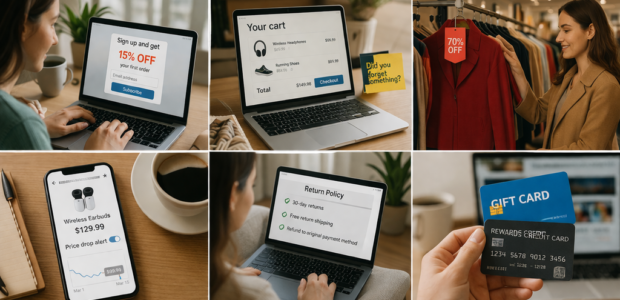
Most retailers offer 10–15% off just for signing up. Create a separate email address purely for shopping subscriptions so it doesn’t clutter your main inbox, then let the discount codes roll in. Pair a fresh newsletter code with seasonal promo codes for even bigger savings on your first order.
5. Abandon Your Cart (On Purpose)
This sounds counterintuitive, but it works surprisingly often. Add the item to your cart, then close the tab and walk away. A lot of retailers track abandoned carts and will email you a discount code within 24–48 hours to get you to come back and finish the purchase. It’s not guaranteed every time, but it costs you nothing to try.
6. Shop Off-Season for Big Discounts
The biggest markdowns happen right after a season ends, not during it. Winter coats get slashed in March. Patio furniture drops in September. If you can plan even a few weeks ahead instead of buying the moment you need something, you’ll consistently pay less. This is also when seasonal sales events tend to overlap with clearance pricing, which is a genuinely good combination.
7. Set Price Alerts Instead of Checking Manually
Constantly refreshing a product page is a waste of your time. Price-tracking tools will monitor an item and notify you the moment it drops, so you can buy at the actual low point instead of guessing. This is especially useful for electronics and big-ticket items where prices fluctuate often — worth checking against current electronics deals too before you commit.
8. Read the Return Policy Before You Pay, Not After
A great price isn’t actually a good deal if you’re stuck with an item you can’t return. Before buying – especially from a smaller or unfamiliar retailer – check the return window, who covers return shipping, and whether it’s store credit only. This single habit has saved me from several bad purchases.
9. Use Old Gift Cards and Reward Points First
Check your accounts before paying full price with a debit or credit card. Unused gift cards, loyalty points, and credit card cashback rewards are money you’ve already earned – using them first is the simplest savings hack on this whole list, and the easiest one to forget.
10. Build a Wishlist Instead of an Impulse Cart
Whenever you want to buy something that isn’t urgent, add it to a wishlist and give it 48–72 hours. Most of the time, one of two things happens: the price drops, or you realize you didn’t actually want it that badly. Either way, you win. If you want to double-check for a better price during that waiting period, it’s worth a quick look at today’s active deals before you commit.
Final Thoughts: Shop Smart & Save More
None of these tips require you to stop shopping online – they just shift the odds back in your favor. Compare before you buy, stack your discounts, wait out impulse buys, and let tools do the tracking for you instead of doing it manually.
If you want an easy way to catch new coupon codes and deals as they go live, it’s worth bookmarking BlogSaving’s deals page – new codes get added regularly, and it takes the guesswork out of “is this actually the best price?”
FAQ
What's the easiest way to save money shopping online?
Comparing prices and applying a coupon code before checkout is the fastest habit to build – it takes under a minute and works on almost every purchase.
Do cashback and coupon codes actually stack?
Yes, in most cases. A percentage-off code lowers the price at checkout, while cashback is credited afterward based on the amount you spent – they work independently of each other.
Is it worth waiting for sales events to buy big-ticket items?
Usually, yes – especially for electronics and seasonal goods. Combining a sales event with a price alert on the specific item you want gives you the best shot at the lowest possible price.